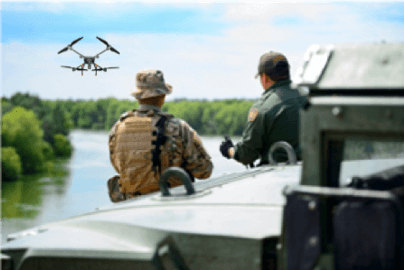
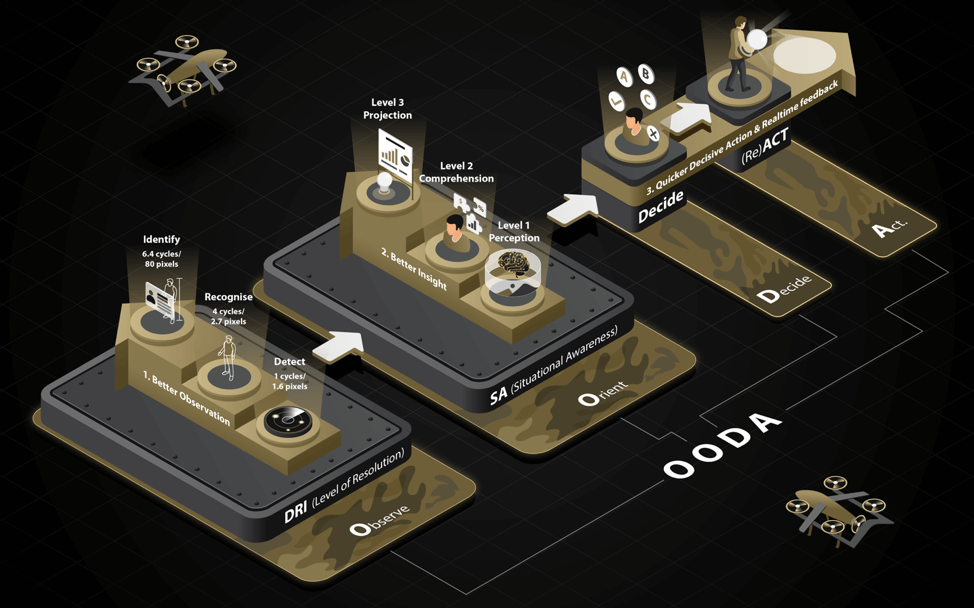
In an emergency, every second counts. Whether it’s a natural disaster, a fire, or a large-scale accident, first responders need immediate access to accurate information. Surveillance UAVs—unmanned aerial vehicles equipped with advanced cameras, sensors, and analytics—are redefining how emergency teams respond to crises. By delivering real-time insights, extending visibility into dangerous areas, and reducing response times, UAVs have become an indispensable tool for firefighters, paramedics, and law enforcement agencies worldwide.
This article explores how UAVs are supporting search and rescue operations and other first responders with faster, safer, and more cost-effective operations. We’ll look at their role in crisis management, real-world applications, key benefits, as well as the challenges and future opportunities of UAV integration in public safety.
The Role of UAVs in Supporting First Responders
What Are Surveillance UAVs?
Surveillance UAVs are advanced drones equipped with high-definition cameras, thermal imaging, and AI-powered analytics. Their ability to capture aerial views, map hazardous zones, and provide real-time data gives responders the information they need to act quickly.
Who Are First Responders?
Firefighters, emergency medical teams, and law enforcement officers face unpredictable, high-risk environments. UAVs provide these teams with immediate situational awareness, helping them monitor large areas, identify risks, and coordinate resources more effectively—all without unnecessary exposure to danger.
Real-World Applications
From monitoring wildfires in California to supporting flood response in Europe, UAVs have proven their value in real-world emergencies. For example, drones deployed during the California wildfires helped crews track fire progression and identify hotspots—critical insights that saved time, resources, and lives.
Key Benefits of Surveillance UAVs for First Responders
Enhanced Situational Awareness
Drones offer a comprehensive aerial perspective that ground teams cannot achieve on their own. This capability enables responders to quickly assess the full scope of an incident.
Example: During a wildfire, UAVs can identify fire spread, locate hotspots, and deliver live mapping data to command centers.
Faster Response and Greater Efficiency
Deploying drones reduces the time spent on manual assessments, allowing teams to respond faster.
Example: In a collapsed building scenario, UAVs can assess structural damage and locate survivors far more quickly than manual inspections.
Safe Monitoring of Hazardous Environments
UAVs minimize risk by monitoring disaster zones or hazardous material spills from a safe distance.
Example: In chemical spill incidents, UAVs provide a live overview of the affected area, enabling responders to plan containment strategies without entering dangerous conditions.
Cost-Effectiveness and Resource Optimization
Compared to manned helicopters or large ground deployments, UAVs used for search and rescue missions offer a cost-effective alternative that optimizes limited resources.
Example: At large public gatherings, like festivals and political rallies, UAVs can provide routine aerial surveillance, reducing the need for extensive ground patrols.
Use Cases of UAVs in Emergency Scenarios
Search and Rescue Missions
Equipped with thermal imaging, UAVs can quickly locate missing persons in forests, mountains, or disaster-struck regions where time is critical.
Firefighting Operations
Drones provide live aerial feeds that track fire behavior, identify evacuation routes, and support containment strategies.
Disaster Response and Recovery
After hurricanes, floods, or earthquakes, UAVs help assess infrastructure damage and guide recovery operations by delivering rapid, detailed aerial surveys.
Challenges and Considerations
Privacy and Ethical Issues
Constant surveillance can raise privacy concerns in populated areas. Agencies must adopt responsible data collection practices to maintain public trust.
Regulatory Compliance
In the U.S., UAVs must comply with FAA guidelines, while other regions enforce their own airspace and operational standards. Strict compliance ensures safe and legal usage.
Technical and Environmental Limits
Battery life, payload restrictions, and weather sensitivity can impact UAV performance, especially in extended or harsh missions.
Cybersecurity Risks
Like any connected system, UAVs are vulnerable to interference or hacking. Robust cybersecurity measures are essential to protect sensitive mission data.
The Future of Surveillance UAVs in First Response
AI and Smarter Analytics
AI is making UAVs more capable, enabling them to detect anomalies, track movement, and analyze live feeds autonomously—reducing human error and improving decision-making.
Autonomous Operations
Advances in autonomy will allow UAVs to carry out search patterns, analyze data, and respond to incidents with minimal oversight.
Expanding Use Cases
The potential goes beyond surveillance. Future UAVs may deliver emergency medical supplies, conduct environmental monitoring, or support predictive crisis management systems.
Regulatory Evolution
As governments explore Beyond Visual Line of Sight (BVLOS) regulations, UAVs will gain more freedom to operate over longer ranges—unlocking new opportunities for public safety applications.
Conclusion
Surveillance UAVs are revolutionizing how first responders manage emergencies. By enhancing situational awareness, improving response times, and lowering operational costs, the use of UAVs for search and rescue operations is proving to be a powerful ally for first responders. While challenges remain, their role in emergency response is only set to expand.
As technology advances, UAVs will continue to empower first responders with smarter, safer, and more efficient tools—ultimately saving more lives and shaping the future of crisis management.